Table of Contents
Sticker price tells a small part of the story when buying tractors and implements. The real cost shows up in fuel use, repairs, downtime, and resale, so a checklist covering workload, history, support, and paperwork helps keep a purchase on track.
Start with the tasks the machine must handle
Too many buyers start with a model and try to fit the farm around it. The order should run the other way. Write down what the machine must do across a full season. That list shapes every other choice.
Ask how many hours per week the machine will run in peak season and what implements it must pull for each job. Note soil type and slope, along with travel distance between blocks and road time. Pull spec plates and manuals for current implements and write down hitch category and hydraulic coupling type. Don’t rely on memory or sales brochures for these numbers, because small errors here lead to poor matches that cost money for years. Separate must-have jobs from nice-to-have jobs in that list.
Measure shed doors and transport limits before shortlisting models. A machine that is too tall for storage or too wide for routine road moves without a permit creates problems from day one. Buyers who plan outside peak demand often have more time to compare spec sheets and delivery dates.
A machine that can’t do the work isn’t a bargain at any price.
Match power and hydraulics to the implements
Engine horsepower gets attention in ads, but it doesn’t tell how a tractor performs with a slasher or sprayer behind it. PTO horsepower, hydraulic flow, lift capacity, and cooling reserve decide whether the combination works without strain through long days.
Ask the dealer for rated PTO horsepower at specific engine speeds and compare those figures to the heaviest implement combination planned for regular use across the season. Check hydraulic flow at the remotes and lift capacity at the hitch points. Two tractors with similar engine ratings can act very differently when oil flow is short or lift is light, so spec sheets matter more than headlines.
Confirm PTO speed and shaft size, along with hitch category and lower-link capacity. Check remote count and coupling type as well. Adapters can bridge small gaps, but wrong hitch size or low oil flow turns into slow cycle times and extra heat that wears parts faster. If guidance or telematics matter, ask whether the machine is ready for GPS guidance and autosteer or needs extra wiring and screens. Compatibility with current tools and future add-ons protects resale appeal down the road. Get the match documented for each implement before making a purchase.
Look past hours to maintenance history and documents
Low hours look good in photos. They don’t prove light use or regular care. History tells the real story behind the meter reading.
Ask for logbooks, service receipts, repair invoices, and parts bills that show dates and work done. Look for consistent servicing at set intervals and notes on major jobs such as clutch or transmission work. Gaps in records don’t always mean neglect, but they leave repair risk with the buyer. A professional inspection is especially important when a machine has no papers, since hidden wear often costs more than a discount saves.
Ownership and finance documents deserve attention too, including proof of clear title and serial numbers that match plates on the frame and engine. For ex-fleet or ex-hire units, ask how they were used and why they were retired from service. Two machines with similar hours can carry very different repair bills, so paper history counts as much as paint condition. There’s no shortcut around this step. Sellers who keep good records usually share them without fuss, and any gaps warrant questions about why those records are missing and a written explanation.
Ask for a qualified inspection in safe conditions
A shiny repaint can hide leaks and cracks, and a short walkaround can’t test steering play or brake response. Buyers need someone trained to spot trouble before purchase.
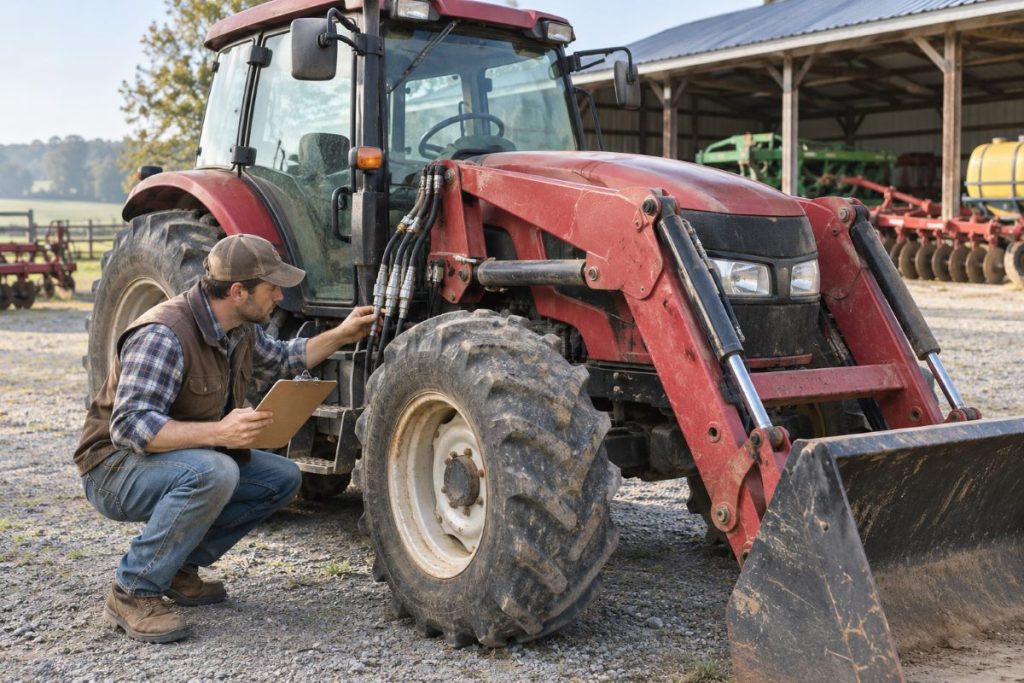
Have a qualified mechanic inspect the machine in a suitable controlled area before money changes hands. The check should cover leaks at hoses and seals plus wear at pins and bushes. Welds and loader arms should be checked for cracks as well, along with tires and rims for signs of overload.
Tire condition, cab mounts, seat structure, and pedal wear can point to hard use, but only a trained eye should judge what is wear and what is damage. There’s no safe way to judge load performance from photos or idle engine noise.
Ask the dealer to arrange any load or PTO demonstration with a qualified authorized operator at the controls in a suitable area. Don’t ask for or accept a test that puts people near spinning shafts or raised loads without guards in place. If brakes or steering show faults, stop the process and get a written repair quote. Keep notes and photos from the inspection with the quote file. No bargain covers a safety failure.
Weigh dealer support and parts backup
Machines break at the worst time. Support in peak season matters more than polish on the showroom floor, because downtime costs money every hour a machine sits idle. Coffee in the waiting room says little about the help available during a breakdown.
Look at parts stock on hand and access to backup stock during busy periods. Ask who does warranty work and how many factory-trained technicians are on staff. Find out the average wait for field service, including how after-hours breakdowns are handled.
For growers in Western Australia, comparing farm machinery Perth suppliers on response times and backup service is just as important as comparing the sticker price.
Ask other owners about reliability of service. Call two or three local references and ask about call-back speed and repair quality. A stable dealer with long ties to a brand is often safer than a new outlet with thin stock. Precision tools add another layer, so check who calibrates GPS gear and who updates software for guidance systems. There’s value in a dealer who has sold the same brand for years and keeps service history on file. Ask how long the current franchise has been held and whether technicians train at the maker’s school each year.
Get warranty and paperwork in writing
Verbal promises fade fast when a claim is on the line. Written terms give buyers something to refer to, and are worth understanding before any deposit is paid.
Written warranty terms should cover start and end dates, hour limits, excluded items, and claim steps. For used or ex-demo units, the transfer process and claim procedure deserve particular attention, along with any paperwork the maker needs to record the change of ownership.
Maker-approved service and parts terms can affect warranty scope. Some makers set rules for service intervals and approved fluids. Written explanations from the maker or dealer can help clarify those rules. Commercial warranty terms sit alongside legal rights and don’t replace them, a distinction worth understanding when comparing options.
Return options deserve the same attention, including whether there is a short return window and who pays transport if the machine is rejected. Condition requirements may also apply to a return. Dates and limits in writing give buyers a reference before funds move. Copies of promises, the sales contract and delivery docket provide a useful record for future reference. That file can matter in a dispute. Exclusions and gray areas are worth discussing before an agreement is signed.
Add up total ownership costs without guesswork
Purchase price is only part of the cost of owning machinery. Fuel and upkeep affect the final bill, and idle time adds to it.
A simple ownership budget can list finance repayments and insurance alongside fuel and scheduled service. Tires, cutting edges, oils, and filters also wear with hours. Dealer quotes for service at set hour marks and typical prices for wear items help make the comparison more useful. Fuel-use figures from spec sheets for similar load profiles offer a better comparison than yard talk.
Where finance is involved, written quotes and guidance from an independent adviser can help clarify the full costs of a purchase. A general ownership estimate is not a substitute for financial advice. Looking across two or three seasons, rather than just year one, gives a broader view of the costs involved. An adviser familiar with local operating costs can help assess those estimates.
Think about resale in general terms. Brands with steady local demand and easy parts access tend to hold value better at trade-in time. Uncommon specs and orphan models can be harder to move, even if they work well. A slightly higher upfront price can work out lower over years of use. A low sticker price deserves a closer look when running costs are high.
Confirm safety, transport and handover
A machine must be safe before it is productive. Guards and warning signs protect people who work near it every day. Safety gear isn’t an optional extra.
Check for rollover protection and seatbelts plus intact guards over PTO shafts and belts. Have brakes and steering checked through a qualified inspection, not a quick lap when a fault is suspected. Lights and reflectors should suit road travel at dawn and dusk. If items are missing, allow for maker-approved replacements before the machine enters service.
Confirm transport width, transport weight, permit needs, and shed clearance with real numbers. Ask about delivery timing and who handles loading and tie-down. Find out what training is included for safe operation and daily checks, along with which manuals come with the machine. A handover that includes documents, keys, codes, and service contacts leaves fewer questions on day one.
Walk the storage area with a tape and note door height and bay length for the new combination. Check power needs for battery upkeep and security for tools kept on board. Ask neighbors or local contractors how the same model handles in local soils and slopes, since lived experience often picks up quirks that brochures miss. Good planning here avoids costly surprises after the truck leaves.
Good machinery buys rarely come from luck. They come from clear task lists and honest history, backed by qualified checks and written terms. Buyers who work through each point protect uptime and budgets long after delivery day.