Table of Contents
The monthly number is not the whole cost
When you rent a bedspace, a partition room or a private room in Dubai, the monthly figure in the listing is only the start of the conversation. A bedspace advertised at AED 600 a month can cost you considerably more — or considerably less — than a bedspace advertised at AED 800, depending on what is bundled into the price. Electricity and water, WiFi, furniture, kitchen access, cleaning and the deposit all sit outside the headline number unless the listing says otherwise, and the only way to know is to ask before you pay anything.
The ranges are wide. Across live listings in Dubai and Sharjah in November 2026, bedspaces run from around AED 320 to AED 2,000 a month, partition rooms from around AED 700 to AED 2,200, and private rooms from around AED 1,100 to AED 4,900. The cheapest bedspace is rarely the cheapest month once bills and extras are added, and the dearest room is not always the worst deal. What matters is the total monthly cost and what it covers.
What is usually included
Most shared rooms in Dubai are let on an all-inclusive basis, but “all-inclusive” means different things to different landlords, so treat it as a question, not a promise. These are the items to confirm one by one:
Electricity and water (DEWA). In Dubai this is DEWA, the Dubai Electricity and Water Authority; in Sharjah it is SEWA. In most shared housing the bill is either included in the rent or split between the occupants of the flat. Ask which one it is, and if it is split, ask how: equally between everyone, by room, or by meter reading. Also ask who holds the DEWA account, because the account holder is the person who receives the bill and, in practice, the person who can disconnect the supply.
WiFi. Internet is included in the rent in most shared flats, but the speed and the sharing arrangement vary. Ask whether the connection is shared across the whole flat and how many people use it. If you work from home or take video calls, that matters more than the headline speed.
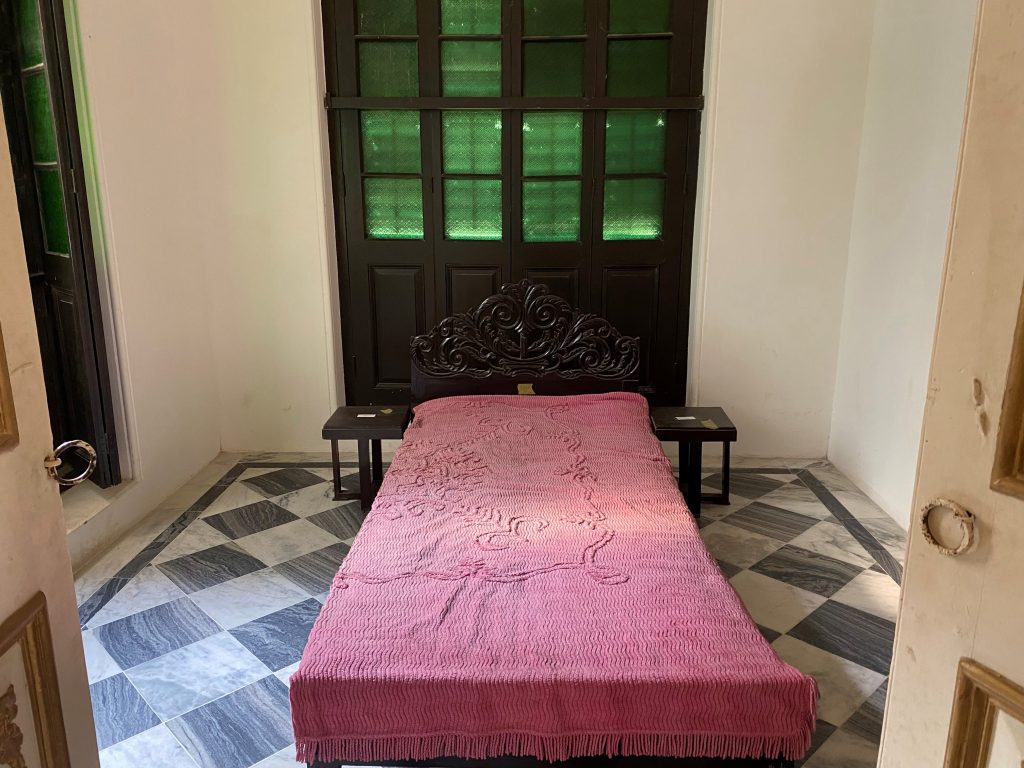
Furniture. A bedspace usually means a bed, a mattress and a small cupboard or wardrobe. A partition room usually adds a little more: a bed, a cupboard, sometimes a small desk or a chest of drawers. A private room is more likely to be furnished with a bed, wardrobe, side tables and occasionally a television or a small fridge. None of this is guaranteed. Check the mattress, open the cupboard doors, and check whether the furniture in the photographs is the furniture that will actually be there when you move in.
Kitchen and bathroom. In shared housing the kitchen and bathroom are shared with the other occupants. Ask how many people share them, whether there is a cooking schedule, and whether there is a separate fridge shelf or storage space for you. A flat with four bedspaces and one bathroom is a different life from a flat with two.
Cleaning and maintenance. Some landlords include a weekly clean of the common areas; most leave it to the occupants. Ask who cleans the kitchen and bathroom, and who pays when something breaks — a leaking tap, a dead air-conditioner, a broken washing machine. Get the answer before you move in, not after the first breakdown.
DEWA and bills: included or split?
This is the single most common source of surprise in the first month. If DEWA is included in the rent, your monthly cost is fixed and predictable. If it is split, your monthly cost moves with the season — summer air-conditioning in Dubai is not a small expense — and with how many people are in the flat.
If the bill is split, ask for three things: the basis of the split, a copy of a recent bill so you can see the real size of it, and the name of the person who pays DEWA directly. If nobody can show you a recent bill, treat the rent as if the bill were on top of it when you compare options. And if you are told DEWA is included, ask whether there is a cap: some landlords include it “up to” a figure and charge the excess, and that cap should be written down.
The same logic applies to the chiller, where the building charges cooling separately. In some buildings the chiller is included in the rent; in others it is billed on top. It is one of the first questions to ask about any room in a tower, because chiller charges in summer are large enough to change the arithmetic completely.
Furniture and appliances: what to expect
Furnished in Dubai does not mean the same thing everywhere. A room described as furnished may contain a bed and a cupboard and nothing else, or it may contain everything down to the kettle. The listing photographs are a guide, not a contract, so check the room in person.
Look at the condition of the things you will sleep on and use every day. A mattress that has served five previous tenants is not the same as a new one. Test the air-conditioner, run the tap, open the fridge and check the washing machine if there is one. If something is broken or missing, raise it before you pay — afterwards your leverage is gone, and in a shared flat the landlord’s answer is often that the last tenant left it that way.
Add these inspections to your moving checklist so you can record any damage or missing items before moving in.
If you are comparing two rooms at different prices, compare what is in them as well. A room at AED 1,400 with a proper bed, a wardrobe, a working air-conditioner and WiFi included can be cheaper, month for month, than a room at AED 1,100 where you must buy your own mattress, pay for WiFi separately and split a DEWA bill you have never seen.
The deposit and the fine print
The deposit is where most disputes start, and most of them are avoidable. Deposits for a bedspace or partition are commonly one month’s rent, sometimes less, and the terms should be written down before any money changes hands: how much, what it covers, under what conditions it is returned in full, and how many days after you leave it comes back.
Three checks matter before you pay anything. First, visit the room in person — never pay for a room you have not seen. Second, confirm who you are paying: the landlord, or someone acting for the landlord with the landlord’s knowledge. Third, get the deposit terms in writing, even if it is only a message confirming the amount, the date and the return conditions.
There is also a legal point worth knowing. Dubai Law No. (4) of 2026, which governs shared housing, is in force from 26 August 2026, with a grace period running to 26 August 2027. Ask whether the flat has the shared-housing permit the law requires and whether there is an Ejari registration for the tenancy. A landlord who can answer those questions plainly is a good sign; one who cannot is a reason to pause. The law sets the framework, but your protection in practice is the paper trail: the written terms, the receipts and the messages.
Finally, ask about notice. How many days’ notice must you give before leaving, and what happens to the deposit if you leave early? A one-month notice period is common. Know it before you move in, because leaving in a hurry is when deposits most often disappear.
A checklist before you pay
- Visit the room in person and test the air-conditioner, taps and appliances.
- Confirm what the rent includes: DEWA or SEWA, WiFi, chiller, cleaning and maintenance.
- Ask how bills are split, and see a recent bill.
- Check what furniture is actually included, and in what condition.
- Confirm who you are paying and get the deposit terms in writing.
- Ask about the shared-housing permit and the Ejari position under Law No. (4) of 2026.
- Agree the notice period and the deposit return conditions before you hand over any money.
The room is the price plus the package
Renting a room in Dubai is rarely about finding the lowest number in a listing. It is about finding the lowest true monthly cost for a room you can actually live in: a bed that is yours, bills you understand, internet that works, a kitchen and bathroom shared with a reasonable number of people, and a deposit whose return conditions are written down. Ask the seven questions above, compare the total cost rather than the headline rent, and the cheapest room will usually turn out to be the one with the fewest surprises — not the one with the smallest number. You can browse live rooms, bedspaces and partitions across Dubai and Sharjah at Gulf Property Link.